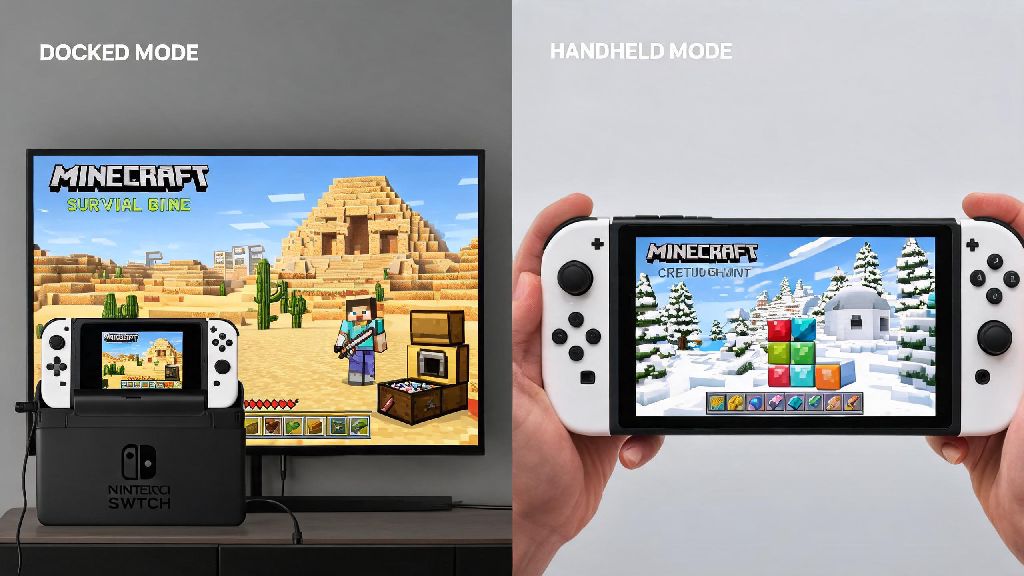
If you’re a Nintendo Switch owner who loves open-world sandbox games, you’ve probably asked can you play Minecraft on Switch at least once while browsing the eShop or scrolling through game recommendations. The short answer is a resounding yes, but there’s a lot more to know about how the Switch version stacks up to other platforms, what exclusive perks you get, and how to make your gameplay experience as smooth as possible. I’ve been playing Minecraft on Switch for over four years, both docked and handheld, so I’ve picked up plenty of hacks and insights to share for new and returning players alike.
Can You Play Minecraft on Switch: Core Version and Basic Features
The Nintendo Switch version of Minecraft runs the Bedrock Edition, the same base version used for Xbox, PlayStation, mobile, and Windows PC Bedrock downloads. That means you get full access to all core Minecraft modes including Survival, Creative, Adventure, and Hardcore, plus support for community-made maps, skins, and texture packs from the official Minecraft Marketplace. The Switch version of Minecraft receives the same regular content updates as every other Bedrock platform, so you won’t miss out on new biomes, mobs, or mechanics when they drop globally.
In terms of performance, the game runs at 1080p and a steady 60fps when docked to your TV, and 720p 60fps when played in handheld mode. Load times are slightly longer than what you’d get on a high-end PC or latest generation PlayStation/Xbox, but they’re rarely long enough to be frustrating for casual players. I’ve played through entire survival worlds both on long flights in handheld mode and docked with friends on my TV, and I’ve rarely run into performance issues outside of extremely large, redstone-heavy builds.
Exclusive Perks of Playing Minecraft on Nintendo Switch
One of the biggest draws of the Switch version is the platform-exclusive content you won’t find anywhere else. Switch players get access to exclusive, Nintendo-themed DLC that you can’t get on any other Minecraft platform, including free skin packs featuring characters from Super Mario, The Legend of Zelda, Splatoon, and Animal Crossing. Some of these packs come pre-installed with the game, while others are available for a small one-time fee in the marketplace.
The Switch’s hybrid design is another huge perk for Minecraft fans. You can work on your base during your commute in handheld mode, then dock your console when you get home and pick up exactly where you left off on your TV without any file transfers or extra steps. Local split-screen multiplayer is also supported for up to four players on the same console, as long as you have enough Joy-Cons or controllers for everyone. I once spent a 3-hour train ride building a full castle in creative mode, then docked my Switch when I got home to show it off to my roommates without having to transfer any files.
Limitations to Know Before You Buy Minecraft for Switch
The Switch version isn’t perfect, and there are a few drawbacks to consider if you’re used to playing Minecraft on other platforms. First, mod support is extremely limited. The Switch version does not support Java Edition mods, so you won’t be able to use custom modpacks or advanced user-created mechanics that are popular with PC players. You can still download custom maps, skins, and simple add-ons from the Minecraft Marketplace, but you won’t have the same level of customization as Java Edition players.
Storage can also be a concern for players who download a lot of extra content. The base game only takes up around 2GB of space, but large custom worlds, multiple texture packs, and DLC can add up quickly, so you may want to invest in a microSD card if you have a lot of other games stored on your Switch. Extremely complex builds with hundreds of redstone components or dozens of loaded mobs can also cause occasional frame drops, especially in handheld mode.
If you do run into common issues, these quick fixes almost always solve the problem:
How to Get the Most Out of Your Minecraft Switch Gameplay
To unlock all the features of Minecraft on Switch, the first thing you should do is link your free Microsoft account to your Switch profile. This lets you access crossplay with friends on other Bedrock platforms including Xbox, PlayStation, PC, and mobile, so you can join the same worlds no matter what device your friends are playing on. You don’t need a Nintendo Switch Online subscription to play Minecraft offline or with friends locally on the same console, but you will need one if you want to join online servers or play with friends who aren’t in the same room.
Linking your Microsoft account also lets you back up your worlds to the cloud, so you won’t lose your progress if your Switch gets damaged or lost. You can even transfer your worlds between your Switch and other Bedrock platforms if you decide to upgrade to a PC or another console later on. For longer play sessions, I recommend using a Nintendo Switch Pro Controller instead of Joy-Cons, as the larger buttons and more ergonomic design make mining and building far more comfortable over several hours.
If you want to play with a group of friends regularly, you can sign up for a Minecraft Realms subscription to host a persistent world that’s always online, even when your Switch is turned off. Realms support up to 10 players at a time, and you don’t have to worry about setting up or maintaining a server on your own. I’ve run a Realm for my friend group for two years, and it’s been far more reliable than trying to host a world locally on my Switch.
At the end of the day, if you were asking can you play Minecraft on Switch, you’ll be happy to know it’s one of the most flexible, fun versions of the game available for casual and mid-tier players. It’s perfect for anyone who wants to play both on the go and on their TV, or who wants to play local multiplayer with friends without setting up a bunch of extra equipment. It’s not the best choice for players who want to run heavy custom modpacks, but for 90% of Minecraft fans, the Switch version is well worth the cost.