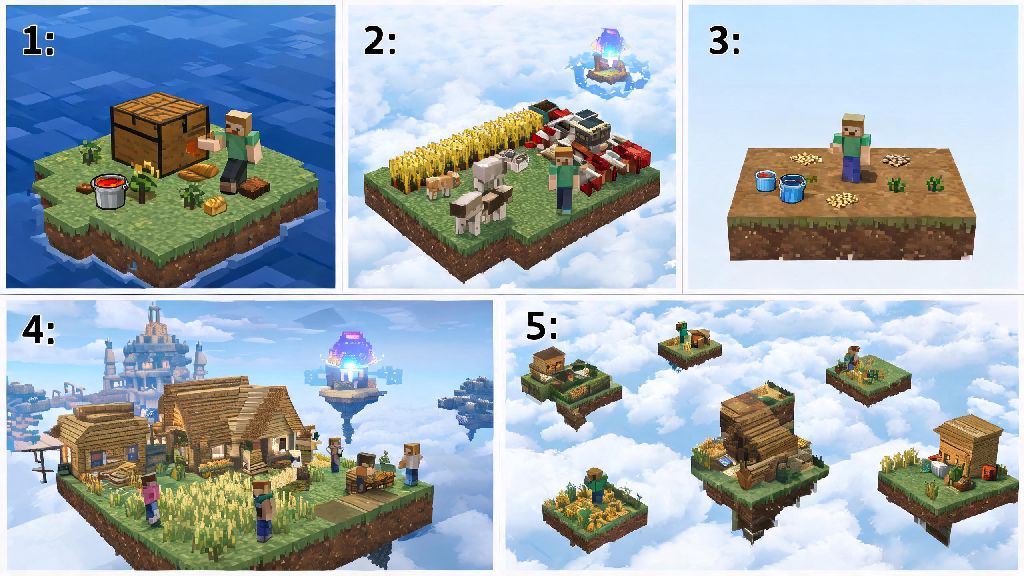
If you’ve ever scrolled through Minecraft social media and seen players building massive, self-sustaining floating farms hundreds of blocks in the air, you’ve probably seen Skyblock in action. It’s one of the most popular custom survival modes in the game, and it feels way more intimidating to start than it actually is. I’ve been playing Skyblock for over 6 years, across dozens of public servers and custom modded versions, and I still get a rush of excitement every time I spawn on a new tiny dirt island with nothing but a bucket of lava and a few seeds. Today, we’re breaking down exactly how to play Minecraft Skyblock for total beginners, no prior custom map experience required.
How to Play Minecraft Skyblock: First Spawn Steps You Can’t Skip
Most standard Skyblock maps spawn you on a 2x2 or 3x3 dirt island with a small chest of basic supplies: usually one lava bucket, one water bucket, a few oak saplings, some seeds, and maybe a piece of bread. It’s not a lot, but it’s all you need to build a fully functional island if you follow the right steps. Never dig straight down on your starting island, even if you’re curious what’s below – every block of dirt you lose early on is nearly impossible to get back, and falling into the void means you’ll lose all your starting items immediately.
Your first task is always to make a cobblestone generator, the only renewable source of building blocks you’ll have for your first hour of play. The standard design is simple: dig a 1x4 trench in the dirt, place your water bucket in the leftmost hole, your lava bucket in the rightmost hole, and leave the two middle spots open. The water and lava will meet at the second block from the left, generating infinite cobblestone you can mine as needed. Make sure you place the water first, or the lava will burn your water bucket before you can place it, and you’ll be stuck with no way to make cobblestone.
Stick to these three non-negotiable first 10-minute steps to avoid an immediate restart:
Don’t use your first lava bucket for anything other than the cobblestone generator for your first hour of play. You can’t get more lava until you build a nether portal, so wasting it on smelting or building means you’ll lose your only source of cobblestone, which is a run-ending mistake for new players.
Core Resource Management Rules for Long-Term Skyblock Survival
The biggest difference between Skyblock and vanilla survival is that every single item has value, and wasting even small resources can set you back hours of progress. Unlike regular Minecraft, you can’t just wander into a forest to cut more wood or dig into a cave for more iron – everything you get has to be farmed intentionally on your small island.
Never throw any item away unless you have a consistent farm for it. Even seemingly useless items like rotten flesh from zombies can be traded to cleric villagers for emeralds later, or used to feed tamed wolves if you manage to spawn them. I learned this the hard way on my third ever Skyblock island: I threw away 12 pieces of rotten flesh because I thought they were useless, then spent 3 weeks waiting for more zombies to spawn so I could trade for my first diamond.
Prioritize building farms in this order to set yourself up for success: first a tree farm, then a wheat farm for food, then a basic mob farm for experience and rare drops. Your tree farm is the most important early on, because wood is used for every tool, crafting table, and basic building block you’ll need. Don’t cut down your only oak tree until you’ve collected at least 2 extra saplings from its leaves, or you’ll be stuck with no way to get more wood and have to restart. You can compost excess seeds and saplings in a composter to get extra dirt blocks, which is the easiest way to expand your growing space early on.
It’s okay to eat apples or bread for your first few days, but make sure you plant every wheat seed you get from breaking grass. Once you have a steady supply of wheat, you can make bread faster than you’ll eat it, and you won’t have to worry about starving if you fall off the edge and lose your food stash.
How to Expand Your Island Without Wasting Valuable Blocks
Once you have a steady supply of cobblestone, food, and wood, you can start expanding your island to make space for more farms and builds. A lot of new players make the mistake of expanding upwards first, but it’s far more practical to expand outwards horizontally first, so you have plenty of flat space to place farms without building complicated multi-level structures.
Always use cobblestone for expansion first, not dirt or wood. Cobblestone is infinitely renewable from your generator, so you don’t have to worry about running out, and it’s resistant to fire and explosions if a creeper spawns on your island. To expand safely, crouch while you’re standing on the edge of your existing island, then place cobblestone blocks off the edge – you won’t fall off while you’re crouching, even if you walk all the way to the edge of the block you’re placing.
You don’t need a super fancy island layout early on, but it helps to mark out separate zones for different uses to save yourself time later. Leave a 10x10 flat area near your spawn for a mob farm, a 5x10 area for crop and tree farms, and a small spot for your nether portal once you have enough obsidian to make one. If you build all your farms right next to each other at first, you’ll end up having to move them later when you need more space, which wastes hours of time you could spend on more fun builds.
Don’t waste your rare early resources on decorative blocks until you have all your essential farms up and running. It’s tempting to build a cute wooden house for yourself in your first week, but if you use all your wood for planks, you won’t have enough to make tools or expand your farms when you need to. Save the decorative builds for once you have a tree farm that produces more wood than you can use in a day.
Common Skyblock Mistakes That Will Make You Restart Your Island
Even if you follow all the basic rules, it’s easy to make small mistakes that can derail your entire island run. I’ve restarted at least 20 islands over the years from dumb avoidable errors, so don’t feel bad if you mess up – it’s part of the learning process. That said, there are a few mistakes you can easily avoid if you know what to look for.
Breaking your only nether portal before you have a flint and steel is one of the most common run-ending mistakes for intermediate players. If you place your portal in a bad spot and break it without a way to relight it, you’ll lose access to the nether entirely, which means you can’t get more lava, netherite, glowstone, or blaze rods for potions. Always make a flint and steel from gravel and iron before you mess with your portal placement.
Another common mistake is letting your only water source flow off the island. If you accidentally break the block holding your water, it’ll pour off the edge into the void and disappear, and you’ll have no way to make a new cobblestone generator or water crops. Keep your water source in a protected, enclosed hole so you can’t accidentally break it when you’re mining or building.
Don’t kill all the passive mobs that spawn on your island before you have a way to breed them. Cows, sheep, and chickens only spawn very rarely on new Skyblock islands, so if you kill all of them for food immediately, you won’t have a source of leather, wool, or eggs later. Keep at least two of each passive mob you spawn, and build a small pen for them so they don’t fall off the edge.
At the end of the day, Skyblock is supposed to be fun, not a stressful test of how well you follow rules. You can build a giant castle, make a farm that produces 1000 wheat an hour, or just mess around and see how long you can survive on 3 blocks of dirt – there’s no right way to play. Now that you know the basics of how to play Minecraft Skyblock, you can log on to your favorite server or download a custom map and start your first island today. Don’t be afraid to experiment, and if you mess up, you can always start over with a new set of skills under your belt.